
Rainbow Path is getting a lot of requests for information from LGBTQIA+ (Rainbow) people overseas who are trying to leave countries where they do not feel safe. We understand it is a really hard time for Rainbow communities, especially transgender people, all over the world right now.
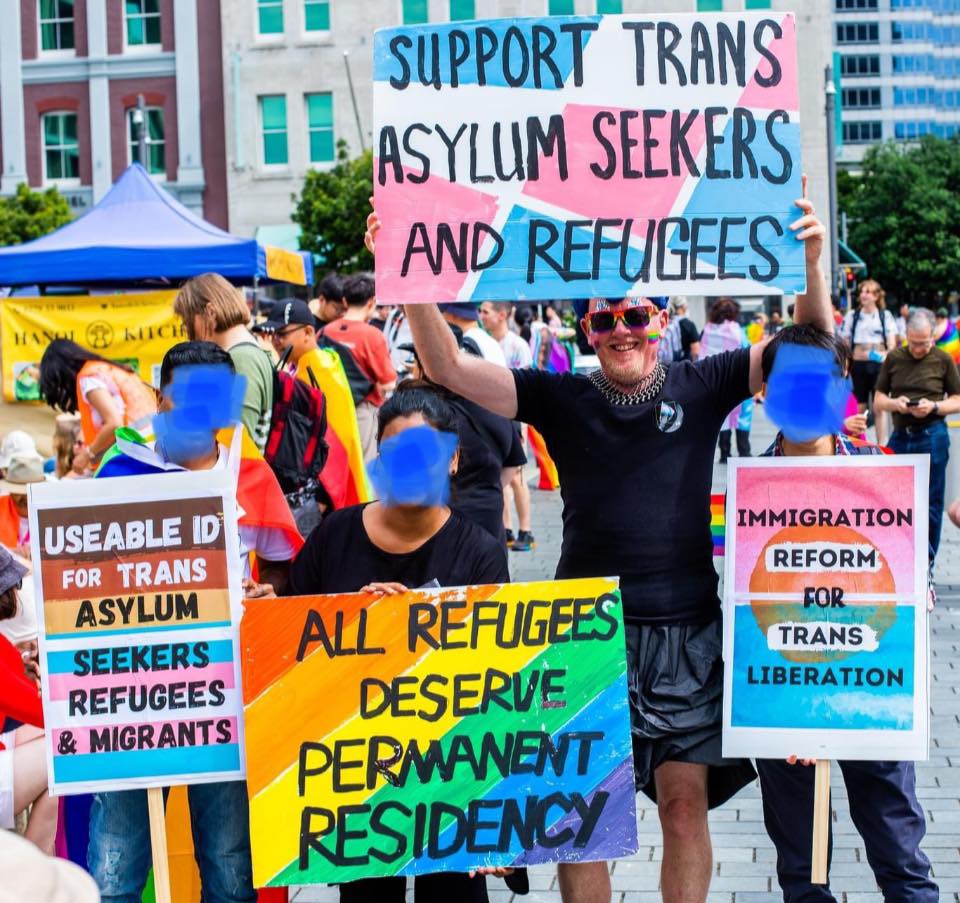
Rainbow Path is a small, voluntary group of mainly LGBTQIA+ refugees and asylum seekers who live in Aotearoa New Zealand. Unfortunately, we cannot help people leave another country or to come to New Zealand. We can only provide support to asylum seekers and refugees after they have arrived in New Zealand.
We are not lawyers and cannot provide immigration or any other legal advice about your individual circumstances. This blog summarises information available publicly online, and draws on the collective experiences of Rainbow Path members. It has 4 sections:
- A. Seeking asylum is the last resort
- B. Immigration pathways to relocate to New Zealand
- C. Seeking asylum in New Zealand
- D. Seeking asylum in another country
The best way for people to contact Rainbow Path is via email. Unfortunately, we do not have the capacity to respond individually to all the emails we receive. So we hope people can find helpful information in this post or on our website. Any information people email to us is totally confidential. We will not disclose it or your email address to anyone else.
If you email us and are already in New Zealand, please make this clear at the beginning of your email. Let us know which part of New Zealand you’re in. We will reply as soon as we can. If you are in New Zealand, seeking asylum, and need urgent support, also contact the Asylum Seekers Support Trust.
A. Seeking asylum is the last resort
If you are able to relocate to another, safer, part of your own country with better legal protection, that is usually the fastest and easiest way to get to safety.
If you are able to get a visa that allows you to live and work in another country, that is always a better option than seeking asylum. Immigration pathways like work to residency pathways are the best routes to stay in New Zealand longer, as these processes provide you the most stability and the most predictable outcomes.
Seeking asylum is the last resort when you have no other choice or have exhausted all options. Seeking asylum may also not be the best course of action for you. This is because:
- The process can take years to go through, and the outcome is uncertain and unpredictable. Unlike immigration pathways such as work to residency pathways where residency is guaranteed once you meet the criteria, each asylum claim is assessed on its own merits.
- There is a high legal threshold to meet. Experiences or fear of discrimination are not enough – the mistreatment you suffered or anticipated must be persistent and amount to serious harm. Feeling unsafe is not enough on its own. The decision-maker will decide whether your fears are justified. They also look at the protection your country could provide you, as well as the alternative for you to relocate to a safer part of your country. Even with the dire experiences of Rainbow people in many parts of the world, there is never a guarantee that you will be successful in your claim to be recognised as a refugee.
- As soon as you start the asylum process, you lose the ability to apply for any other immigration pathway. This means once you start an asylum claim, it’s very rare that you will be allowed to then apply to change to another immigration pathway, e.g., an Accredited Employer Work Visa, even if you find an employer who’s willing to sponsor you or if you withdraw your asylum claim. If your asylum claim is declined at the end of the process, you may not be able to apply for further visas to stay in New Zealand, and you may be deported from New Zealand. If you are deported, this may affect your ability to get visas for other countries.
- If you’re recognised as a refugee, you may never be able to return to your country of origin, or not for a very long time.
Generally, it’s very rare for people with citizenship or permanent status in North America, Western Europe or Australia to be granted refugee status in New Zealand. However, it may be easier for you to come to visit, study or work in New Zealand. If you manage to get a visa that allows you to live in New Zealand, especially if you find work here, there are potential pathways for you to apply to stay here longer or permanently, including through the humanitarian appeal against deportation.
B. Immigration pathways to relocate to New Zealand
Explore your immigration options
If you have the resources, a well-planned migration that allows you to support yourself is always a much better option than getting onto the first plane you can and seeking asylum in New Zealand upon arrival.
If you are planning to relocate to New Zealand, we strongly recommend you first explore visa options that allow you to work here.
People from the New Zealand visa waiver countries may find NZeTA to be the easiest and fastest way to arrive in New Zealand. However, the NZeTA only allows you to stay in New Zealand for up to 3 months at a time (6 months for UK citizens), and it does not give you the right to work in New Zealand. This means you cannot work during your stay in New Zealand on an NZeTA, and you will need to leave New Zealand by the end of your NZeTA. If you want to remain here, you will need to rush to get another visa before it expires, which could be challenging.
Like NZeTA, a Visitor Visa may allow you to visit New Zealand for up to 6 or 9 months, but does not allow you to work in New Zealand. Note a recent change in policy in Jan 2025 means you may be able to do remote work while on a visitor visa for an employer or client based outside of New Zealand. You will need to leave New Zealand by the end of your visitor visa. If you want to remain here, you will need to get another visa before it expires, which could be challenging.
If you are aged between 18 and 30 (35 for some countries), a 12-month Working Holiday Visa can be a good stepping stone for you to find work while living in New Zealand. Depending on which country you’re from, you may be required to be in your home country when you apply for the Working Holiday Visa, and it can take a month or more to process. It also does not allow you to bring people with you on a working holiday visa. If you have a partner or children who want to come to New Zealand, they’ll need to apply for their own visa.
If you are able to obtain an offer of full-time work (at least 30hrs a week) from an accredited employer, you may be able to get an Accredited Employer Work Visa. If you hold an Accredited Employer Work Visa and your job meets the criteria, you may be able to support visas for your family and bring your family here while you work in New Zealand. If you are planning on getting this visa to come to New Zealand, watch out for people who may scam you to steal your money or sign you up with jobs that are not what they promise.
If you are able to find work that meets the criteria for one of these Skilled Residence Pathways, you may be able to apply to become a resident of New Zealand and live here permanently. These are the best routes to migrate to New Zealand, as these processes provide you the most stability and the most predictable outcomes.
If you have the financial resources to, you may also consider applying to study in New Zealand. You may work up to 20 hours per week on a student visa. After completing a degree in New Zealand, you may be eligible for a Post-Study Work Visa for up to 3 years allowing you to work in New Zealand. This could be a stepping stone to find a job that allows you to move on to one of the Skilled Residence Pathways.
If you are relocating with your family, these visas may allow you to bring or join your family in New Zealand.
Things to consider
Anyone travelling to live in New Zealand needs to have sufficient money to pay for their initial accommodation and other living costs until they find work (if their visa allows them to work). It can be very hard to find work in New Zealand, so people need their own savings to live on while they look for a job.
Unlike some countries like Canada, there is no LGBTQIA+ community organisation in New Zealand that provides housing or can help pay rent or food costs. This means people arriving in New Zealand need to have enough money to support themselves and find their own accommodation.
Often the best place to get practical information about living in New Zealand is through private community online groups. Gender Minorities Aotearoa moderates a private online group Transgender and Intersex NZ. They also have a Rainbow Housing Facebook group you can join to look for rooms in a flat with other LGBTQIA+ people. Their website has a lot of information including about accessing gender affirming care in New Zealand.
Rainbow Path’s website has information about some community organisations that provide support to LGBTQA+ people living in New Zealand.
If you’re already in New Zealand
If you are already in New Zealand on a temporary visa and you are unable or unwilling to return to your country of origin, we strongly recommend you see an experienced immigration lawyer who also has refugee law expertise. They will be able to consider your personal circumstances and help you explore your immigration options. This includes exploring other visas you may be eligible for, and assessing the strength of your case to make an asylum claim or a humanitarian appeal against deportation.
Email us for recommendations of Rainbow competent refugee and immigration lawyers.
C. Seeking asylum in New Zealand
If you have no choice but to flee your country urgently, or you have reached a point that you are running out of visa options, seeking asylum may be a pathway for you to get to safety.
Arriving in New Zealand
You can only seek asylum in New Zealand after you have physically arrived in New Zealand. This means the first step of seeking asylum in New Zealand is usually applying for a visa to come here. If you come from one of these visa waiver countries or transit visa waiver countries, you may be able to arrive in New Zealand without a visa.
You can find more information about application criteria for different types of visas on Immigration New Zealand’s official website. To apply for one of these visas, you usually have to show you:
- have a valid passport
- meet health requirements (a chest X-Ray or a medical certificate)
- meet good character requirements (e.g., provide a police certificate to show you have no criminal conviction)
- have genuine reasons to come to New Zealand (e.g., travel plans, invitation letters, an offer to study or work here, etc).
- intend to leave New Zealand at the end of your stay (e.g. return ticket or onward travels, financial/ work/ study/ family commitments in your home country, etc), and
- have enough money in your bank account to support yourself during your stay here (e.g., bank statements, prepaid hotel bookings, etc)
Immigration New Zealand can deny your visa application or deny you entry to New Zealand at the airport for various reasons. Note that the reasons for you to come to New Zealand need to match the purpose of the visa you’re applying for. If you indicate in any way that you are coming here for a different purpose, or if they suspect that you intend to seek asylum in New Zealand or overstay after your visa expires, they may deny your visa or entry.
If you have a partner, and both of you are in New Zealand, you may be able to seek asylum individually or together. If one of you come alone and seek asylum, while your claim is being decided, it may become very difficult for your partner to get a visa to come here. This is because INZ would suspect your partner will come here to seek asylum too. If one of you is granted refugee status, there may be visa options for you to bring your partner to join you in New Zealand. However, as explained below, currently it can take at least 2 years for you to be granted refugee status in New Zealand.
Unfortunately, Rainbow Path cannot help people come to New Zealand. This means we cannot sponsor people or write letters of invitation for your visa application.
If you arrive in New Zealand and want to seek asylum, contact Rainbow Path after you left the airport, and we can put you in touch with a Rainbow competent refugee lawyer.
If you are already in New Zealand on a temporary visa and you want to seek asylum, it’s very important that you speak to a Rainbow competent refugee lawyer as soon as possible, before your current visa expires. Any immigration process can become even more difficult and complicated if your visa has expired and you become unlawful in New Zealand.
Getting legal support
We strongly advise anyone seeking asylum in New Zealand go through the asylum process with the support of an experienced refugee lawyer (rather than going to an immigration advisor or representing yourself). This is because the asylum process is legally complicated and difficult to navigate. An experienced refugee lawyer is the best support to guide you through this process and advocate for your rights.
Depending on your financial situation (income and assets) and the strength of your claim, you may be able to access legal aid for your asylum process. This means if you can’t afford to pay for a refugee lawyer, the refugee lawyer (if they are a legal aid provider) may be able to apply for legal aid to cover the cost of your asylum claim. At some point after you have gone through your asylum claim, you may be asked to pay back your legal aid. Depending on your situation, you may be able to apply to write off your legal aid debt.
There is a limited number of immigration lawyers who have sufficient experience in refugee law and are legal aid providers, and some of them are not competent on Rainbow issues. Please email us for recommendations of Rainbow competent refugee lawyers.
Immigration advisors are not lawyers and most do not have expertise in complicated refugee cases. They also cannot apply for legal aid. This means you will need to pay an immigration advisor yourself for their time working on your asylum claim.
If you’re from North America or Western Europe:
As mentioned above, it’s very rare for people with citizenship or permanent status in North America, Western Europe, or Australia to be granted refugee status in New Zealand. This also means that if you’re from one of these countries, it’s very unlikely that you will be granted legal aid to cover the legal costs of your asylum claim. You will need to pay the lawyer fees yourself.
If you’re from North America or Western Europe and living in New Zealand, your visa is coming to an end, and you cannot meet the criteria to renew it, you may have a better chance applying for a humanitarian appeal against deportation. There is also no legal aid for this process for people on temporary visas, so you will need to pay the lawyer fees yourself. A humanitarian appeal against deportation process is likely cheaper and faster than an asylum claim.
The steps and timeframe for asylum claims
In New Zealand there are two authorities that hear asylum claims – the Refugee Status Unit (RSU) and the Immigration and Protection Tribunal (IPT). After making a written claim to be recognised as a refugee, you will first be interviewed by an officer from the RSU. RSU will then make a decision to grant or decline your claim. If it is declined by RSU, you may then appeal that decision to the IPT..
You can read more about the asylum process on Immigration New Zealand’s website including their timeframes. However, each stage of the asylum process usually takes much longer in reality. For example, it currently can take more than 18 months before you have your first interview with RSU, and longer if you are outside Auckland. It then takes another few months while you wait for RSU’s interview report, respond to any further questions raised, and then wait for a decision. This means on average, it can take 2 years or more to receive a decision from RSU. If RSU declines your claim, it can then take another year or more before your appeal can be heard by the IPT.
Your lawyer will be able to walk you through this process and explain what you can expect in further details. Make sure you have a lawyer you can trust. If you don’t feel comfortable with your lawyer, you should change your lawyer as soon as possible.
Visas during your asylum claim
Generally, once you’ve lodged an asylum claim, you cannot be deported from New Zealand while your asylum claim is being processed. However, it’s important to make sure you hold a valid visa at all times throughout your asylum process. This means you need to keep an eye on your visa expiration date and apply to renew it before it expires. If your previous visa has expired, it can be very difficult to get back onto a visa. And without a valid visa, you cannot work or access any benefit.
After putting in a claim to seek asylum, you may apply for a visa to live in New Zealand lawfully while you wait for a decision. While most asylum seekers are granted a work visa, this process can be delayed for months if you don’t meet the health criteria. If you arrive in New Zealand without a valid passport or do not have a valid visa at the time you seek asylum, you may be refused a visa. People under the age of 18 who seek asylum are usually granted a student visa or visitor visa.
To avoid delays and complications, we strongly recommend you seek legal advice to help with these visa applications for yourself, your partner and/or other family members.
INZ does not charge for these applications from people seeking asylum, but there’s no legal aid to cover your lawyer’s time spent on these visa applications and renewals. Depending on your lawyer’s capacity, you may have to pay the lawyer’s fee for these processes.
Accessing services and practical support
After you have put in your asylum claim, once you receive a letter from Immigration NZ confirming they have received your claim, you are eligible to access some publicly funded essential services. These include healthcare and some very limited benefit payments. Note that you can only receive a benefit if you have a valid visa.
There is some information on our Rainbow Path website about the limited support available to asylum seekers including:
Asylum seekers in New Zealand often experience delays when accessing financial support. This is because it can take a few weeks to a few months to get the documents and visas from Immigration New Zealand to access benefit or look for work. Opening a bank account can also be difficult for people on temporary visas, especially for transgender people if you don’t have an ID that matches your appearance and gender identity. This means you usually need to have enough money to support yourself and pay for your accommodation until you can access benefit or find work.
Asylum seekers are not eligible for emergency housing in New Zealand. Although you may be eligible for social housing, the wait list is very, very long. Unlike some countries like Canada, there is no LGBTQIA+ community organisation in New Zealand that provides housing. Asylum Seekers Support Trust (ASST) may be able to provide short-term accommodation for asylum seekers in Auckland who have no income and are in urgent need of shelter. ASST is Rainbow-friendly, but the hostel accommodation usually involves sharing rooms and bathrooms with other asylum seekers. There is a big demand for this service, and there’s often no bed available. This means Rainbow asylum seekers usually need to find their own accommodation through flatting or live in backpacker hostels.
Many service providers are also unfamiliar with the eligibility of asylum seekers on temporary visas to access their services. They may deny you services or charge you at a higher, non-resident rate. Contact Asylum Seekers Support Trust or us if you need help accessing these services.
After you’re recognised as a refugee or protected person
Once you have been recognised as a refugee or protected person in New Zealand, you cannot be deported from New Zealand. The only exceptions are in very specific circumstances. For example, if you pose a threat to national security or public order, if you have committed serious crimes, or if your asylum claim is found to be fraudulent. However, you still have to make sure you hold a valid visa at all times while living in New Zealand until you are granted New Zealand citizenship.
After being recognised as a refugee, you can apply to become a permanent resident of New Zealand. Depending on your circumstances, you may be able to include a partner and/or other family members in this application. This process currently takes about one year or longer from the time you applied. Although most refugees are eventually granted permanent residency, in certain situations it can be declined. While waiting for your permanent residency, you can apply for a work visa (usually granted for 2-5 years). INZ does not charge for these applications from people who have been recognised as refugees, but there’s no legal aid to cover your lawyer’s time spent on these applications, which means you will need to pay your lawyer’s fees. You will also need to pay for the associated costs, such as medical checks.
To avoid complications and delays, we strongly recommend you seek legal advice to help with these applications for yourself, your partner and/or other family members.
D. Seeking asylum in another country
Unfortunately, most forcibly displaced people have no means to arrive in countries like New Zealand to seek safety. Often people flee to neighbouring countries to escape immediate persecution for being LGBTQIA+. There are some other overseas-based organisations that provide information for people fleeing their country. You can read a bit about that process on this ORAM website for LGBTQIA+ refugees and asylum seekers. Also a group called Rainbow Railroad, that is based in Canada and the USA, supports some Rainbow activists to leave their country to escape persecution.
You may also be able to seek asylum through the United Nations Refugee Agency (UNHCR). To apply for that process, you have to be outside your country and unable to return because you fear persecution. If you are unable to get to a country where you can seek asylum in, this UNHCR website has information about the process of being recognised as a refugee through the UNHCR and support available in many countries. When people get accepted as a refugee through the UNHCR, they may be able to stay in that country. A very small number may eventually be resettled to another country, such as New Zealand.
We hope this information is helpful. Wherever you are, we wish you the best of luck in finding support and safety.





 Rainbow Path NZ